
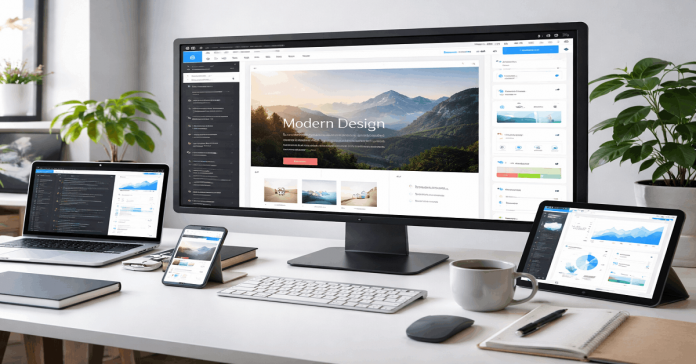
Drag something onto a page. Change a color. Hit publish. The whole thing feels like magic. But something strange happens the moment you try to move your site to another platform.
That “simple” website builder has been quietly converting every click into a proprietary data structure that belongs to the platform, not to you.
Knowing how website builders work behind the scenes changes the way you pick a platform. It also changes how you troubleshoot broken layouts, slow pages, and template headaches.
This matters especially if you run a small business or creative project and plan to grow past your starter plan someday.
What Happens When You Click “Edit” on a Website Builder
The drag-and-drop editor feels like you’re moving boxes around a page. The platform is doing something completely different underneath.
Every visual change gets stored in what the platform calls a site model: a structured database of pages, sections, and components.
The builder never touches raw HTML files directly. It updates the model, then a separate rendering step turns that model into code a browser can display.
The Site Model Is the Real Product
Think of the site model as a giant recipe card. It records which blocks sit where, what text goes inside them, and which style rules apply. The published page a visitor sees is just the final dish.
This model is also the reason migration between platforms is so painful. Squarespace stores your content one way. Wix stores it a different way.
The HTML output might look similar, but the underlying recipe is completely different. So when you export a site, you often get a flat file that looks nothing like what you built.
I think the site model is the single concept that separates people who pick the right builder from people who end up rebuilding everything 18 months later.
Platforms like Webflow expose more of this model to users, which is why their export options are cleaner than closed systems like Wix or Squarespace.
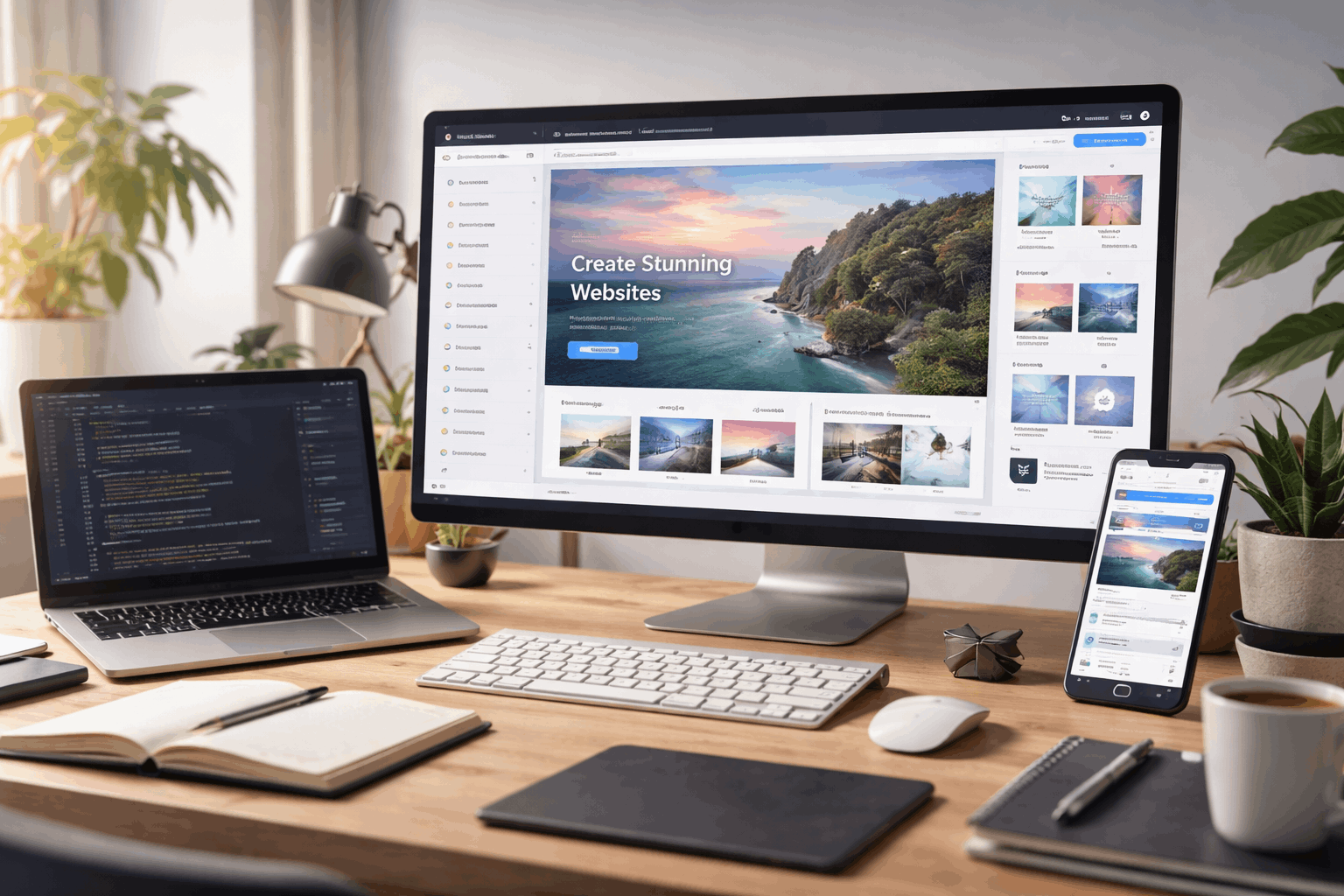
Components and Blocks: Lego Pieces with Rules
Each drag-and-drop block (a header, a gallery, a pricing table) is a component that carries layout data, content fields, and styling rules. The builder can rebuild any page because every component follows a predictable structure.
This component approach also makes templates portable across projects on the same platform. The same contact form block works on a photography site or a bakery site because the component definition is identical.
Why Starting with a Template Can Trap Your Content
Everybody says to pick a template first.
I think that advice causes more problems than it solves, and the raw data backs this up: templates are prebuilt collections of components, style tokens, and page layouts. The moment you apply one, your content gets tied to specific layout assumptions.
Swapping templates later is hard because the builder already linked your text, images, and sections to that template’s structure. Change the template, and your content either breaks or needs manual reassignment.
A Blank Page Gives You More Control
Starting blank forces you to build only the sections you need. There is no orphaned “Our Team” block you never use, no pre-wired blog layout that fights your actual content plan.
A blank start also teaches you how the builder’s component system works, which makes every future edit faster. The template crowd skips this step and then panics the first time a layout breaks after a platform update.
When Templates Do Make Sense
Templates work well for one-time projects with a fixed deadline: a wedding site, a product launch page, an event registration. The content will never need to evolve past what the template assumed.
For ongoing business sites or portfolios, the template shortcut tends to become a long-term constraint.
Hosting, Domains, and DNS: The Invisible Infrastructure
A website builder is also a hosting company. The platform runs servers, manages SSL certificates, and handles DNS records so your custom domain points to the right place.
This bundled hosting is the reason setup feels effortless. But it also means you are renting infrastructure you cannot inspect or control.
Automated SSL and DNS Setup
Some builders walk you through adding DNS records manually. Others manage DNS entirely if you register your domain through them. SSL certificates get issued automatically and renew in the background, so HTTPS stays active without extra work.
This automation removes common launch problems like misconfigured records or browser security warnings. But it also creates dependency. If the builder changes pricing or policies, your domain, hosting, and editor are all tied to one company.
CDN and Edge Networks for Speed
Publishing a page usually means pushing files to a global CDN (content delivery network). Edge servers cache pages close to visitors so the site loads fast even when the origin server sits on another continent.
Speed matters because Google’s Core Web Vitals directly affect search rankings. A builder with weak CDN coverage can cost you organic traffic no matter how good your content is.
| Feature | Bundled Builder Hosting | Self-Managed Hosting |
|---|---|---|
| Setup difficulty | Minimal, often automatic | Requires server configuration |
| Migration flexibility | Low, tied to platform | High, move files anywhere |
| SSL management | Automatic renewal | Manual or plugin-based |
| CDN control | Limited to platform CDN | Choose any CDN provider |
| Cost predictability | Fixed monthly plan | Variable, depends on traffic |
The takeaway: bundled hosting trades control for convenience, and the trade-off matters more as your project grows.
Also read: How to Choose a Website Builder for Your Project
How Website Builders Handle Your Content Behind the Scenes
Website builders include a lightweight CMS (content management system) that stores blog posts, product listings, and pages in collections rather than individual files.
The platform combines your design template with database content to generate each page. This is why a builder can scale from a 5-page brochure site to a 200-post blog without requiring code changes.
Media Storage and Automatic Optimization
Uploaded images and videos go into a separate media system. The platform generates multiple versions of each file: different sizes for desktop, tablet, and mobile, plus compressed formats for slow connections.
Large media files are one of the biggest performance killers on builder sites. A single uncompressed hero image can add 3 to 5 seconds to page load time.
The builder’s automatic resizing catches this, but only if the original upload meets the platform’s size limits.
Design Tokens and Global Styles
A builder’s design panel writes styling into a theme layer using tokens: reusable settings like “primary color,” “body font,” and “button radius.” Changing one token can update dozens of components across the entire site.
This token system is the reason global redesigns on platforms like Squarespace take minutes instead of hours.
But it also means a single careless change can break the visual consistency of every page at once. Always preview a token change across multiple pages before publishing.
Performance, SEO, and Accessibility Automation
Behind every builder sits an optimization engine that minifies code, compresses assets, and caches static content.
The platform also generates sitemaps, canonical tags, and structured metadata. Some builders flag accessibility issues like low contrast, missing alt text, and incorrect heading order during editing.
These automated checks save hours of manual work. But they also create a false sense of security.
Build-Time Rendering vs. Server-Side Rendering
Some platforms pre-render pages at publish time so visitors receive static HTML with minimal processing. Others use server-side rendering plus caching, which handles dynamic content better but adds complexity.
Performance settings often include image lazy-loading, script bundling, and font delivery strategies. The platform manages these automatically.
But if you add third-party scripts (chat widgets, tracking pixels, embedded forms), those scripts bypass the builder’s optimization and can tank your page speed. Google’s PageSpeed Insights is the simplest way to catch this problem.
SEO Panels and Audit Reports
SEO panels map directly to HTML metadata: title tags, meta descriptions, Open Graph tags, and robots directives. Blog features generate category pages, pagination, and RSS feeds.
A common mistake is treating the SEO panel as a checklist. Filling in meta descriptions does not replace writing headlines and body content that answer real search queries. The panel gives structure. The ranking comes from the content itself.
No-Code Integrations and Security Layers
Website builders act as hubs for no-code features: forms, scheduling tools, email capture, and simple automation. Connectors pass data between your site and external tools like analytics platforms, payment processors, and CRM systems.
Webhooks let events like form submissions trigger workflows in automation platforms like Zapier.
This integration layer is where builders become operational tools. A scheduling form connected to Google Calendar through a webhook is a working booking system, built without a single line of code.
Permissions, Backups, and Compliance
Team access is managed through roles and page-level permissions to prevent accidental edits. Version history lets you roll back changes, which matters when templates or plugins update and break something.
Compliance tools vary by platform and plan. Cookie consent banners and data export features are common, but the specifics depend on your region and subscription tier.
Check the platform’s compliance documentation before assuming any particular regulation is covered.
Things to audit before committing to a builder:
- Export options: can you download your site content as clean HTML or only as a proprietary backup file?
- Domain portability: if you leave, can you take your domain immediately or is there a waiting period?
- Third-party script limits: does the builder restrict custom JavaScript that could slow your site?
- Backup frequency: are automatic backups daily, weekly, or only manual?
- Team role granularity: can you restrict specific collaborators to content editing without design access?
The locked-in feeling hits hardest when a builder raises prices and you realize your entire online presence lives inside their system.
One more checklist worth running through before selecting any platform:
- Does the builder let you access and edit the raw HTML/CSS, or only the visual editor?
- Are there transaction fees on e-commerce sales beyond the payment processor’s cut?
- What happens to your data if the platform shuts down or discontinues your plan tier?
Questions People Ask About How Website Builders Work
Q: Do website builders generate clean HTML code? The code quality varies between platforms. Builders like Webflow produce relatively clean output. Others generate bloated markup filled with inline styles and nested div elements. If future migration matters, test the exported code before committing.
Q: Can I move my website builder site to a different platform? Technically, yes. Practically, it is often a partial rebuild. The site model stores content in a proprietary format, so exported files rarely import cleanly into another builder. Blog posts and text transfer more easily than layouts and design settings.
Q: Do website builders slow down my site compared to custom-coded websites? Builders add overhead because they load their own framework on top of your content. But a well-optimized builder site can still score above 90 on Google PageSpeed if you limit third-party scripts and compress images properly.
Q: Are website builders secure enough for e-commerce? The platform handles SSL, server updates, and traffic protection. But the security of your store also depends on the payment processor you connect, the plugins you install, and whether you enforce strong account passwords. No builder handles all of those automatically.
Q: Should I learn HTML before using a website builder? Not required, but even basic HTML knowledge helps you fix broken layouts, add custom elements, and understand why certain edits behave strangely. A weekend crash course covers enough to make a real difference.
Conclusion
The way website builders work behind the scenes shapes every decision after the first click. Templates, hosting, CMS, and integrations all connect through a proprietary site model you rarely see.
Picking a builder without understanding that model is like signing a lease without reading the terms. The best time to learn how your platform stores and generates content is before you start building on it.