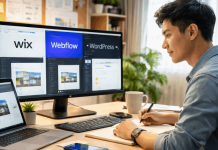

Creating an online portfolio helps you show your work professionally and build trust. This article focuses on Website Builders for Portfolio Websites, highlighting tools that require no coding.
You’ll discover which platforms work best for creatives and what features to prioritize. Use this guide to build a strong portfolio that looks sharp on any device.
Why Creatives Need a Strong Portfolio Website?
A portfolio website lets you showcase your skills and past work in one place. It’s your professional proof online, not just a link to social media.

A strong portfolio builds trust with potential clients or employers. You control the narrative, design, and flow. Portfolios are more than galleries — they tell your story.
They allow you to highlight your specialties clearly and consistently. Unlike a resume, a portfolio shows real examples of what you’ve delivered. That builds confidence and increases your chances of getting hired.
Key Features That Make or Break Portfolio Builders
Choose a builder that balances flexibility, performance, and visibility. These features ensure your portfolio stands out and functions well across devices.
Customization Options
A good builder lets you control layout, fonts, and colors. Look for drag-and-drop tools and responsive templates.
These help you design without writing code. You get full visual control over how your portfolio looks.
Strong Media Support
Your builder must support high-resolution images and video embeds. Smooth galleries make your visuals more engaging.
Avoid platforms that compress or distort images. Visual clarity is crucial for creatives.
Performance and Speed
Fast-loading pages keep visitors engaged. Builders with built-in CDNs and image compression load content smoothly.
Clean code also helps search engines crawl your site. A fast site improves both user experience and SEO.
SEO Tools
Your portfolio should be easy to find on search engines. Choose a builder with meta tags, clean URLs, and alt-text options. These tools improve your visibility online. SEO matters even for creative work.
Mobile Responsiveness
Most people will view your site on phones or tablets. A responsive layout ensures it looks clean on all screen sizes. Test mobile previews before publishing. Your design should adapt without errors.
Contact and CTA tools
Make it easy for visitors to reach you. Look for built-in forms, buttons, and customizable call-to-actions.
These tools boost engagement and conversions. Clear CTAs help turn viewers into leads.
Best Website Builders for Portfolio Websites
You have many builder options, but not all are portfolio-friendly. Here’s how top platforms compare.

- Wix is best if you want total design control. It offers advanced animations, drag-and-drop elements, and hundreds of templates. Its flexibility is great for creatives who want to experiment.
- Squarespace shines with clean, modern templates. It’s popular among photographers, writers, and designers. Its user interface is simple, and mobile optimization is built-in.
- Webflow gives you more design power without writing code. It offers pixel-level control, CMS features, and great animations. It’s ideal for designers with a technical edge.
- WordPress with Elementor combines open-source flexibility with visual building tools. Elementor turns WordPress into a no-code design system. You get access to thousands of plugins for advanced functionality.
- Format is purpose-built for portfolios. Its galleries are clean, its templates are minimal, and client proofing is easy. It’s especially good for photographers and artists.
- Adobe Portfolio integrates with Creative Cloud. If you already use Photoshop or Illustrator, this builder is free. You can sync projects directly from Behance.
Templates That Suit Portfolio Needs
Templates define the structure and vibe of your portfolio. Choosing the right one helps you make a strong first impression.
- Pick a layout that fits your content type. For image-heavy portfolios, grid or gallery templates are ideal. Writers and developers may prefer clean single-column layouts. The right template puts your work front and center without distractions.
- Balance style and usability. A good template guides the viewer while highlighting your strengths. Avoid cluttered designs with too many effects. White space and clear navigation improve readability and interaction.
- Customization options matter. Some templates allow easy adjustments to color, font, and layout blocks. This helps you keep visual consistency across your personal brand. Consistent design adds to your credibility.
- Responsive design is essential. Choose templates that look good across desktops, tablets, and smartphones. If your work displays poorly on mobile, you lose opportunities. Most modern builders offer preview tools to test this.
Tips to Build a High-Impact Portfolio Site
Your builder is a tool — how you use it decides the result. Focus on structure, clarity, and relevance.
- Start with your best work. Don’t overload the site with every project. Instead, highlight 5–10 strong pieces that reflect your style and expertise. Curate by quality, not quantity.
- Add short, clear project descriptions. Tell viewers what you did, why it mattered, and what tools you used. Keep each summary under 100 words. Clarity helps potential clients understand your process.
- Include a professional About page. Share your background, expertise, and contact information. A clear headshot and a short paragraph about your style make a difference. Avoid buzzwords — keep it real.
- Make it easy to get in touch. Add a contact form and visible social or email links. Ensure your call-to-action stands out. Contact buttons should work on both desktop and mobile.
Show real feedback or stats. A short testimonial or project result adds trust. If possible, include direct client quotes. Keep it brief and relevant to the project.
Best Builders for Different Creative Professions
Each profession needs slightly different tools. Match your builder with your creative focus.
- Designers need precision and animation. Webflow and Adobe Portfolio offer advanced control and visual effects. They support hover states, layered layouts, and custom animations.
- Writers and content creators benefit from clean typography. Squarespace and WordPress deliver excellent font choices and layout control. You can also embed PDFs or articles.
- Photographers need fullscreen galleries and high-res hosting. Format and Wix support beautiful visual layouts. Look for options with slideshow features and password-protected galleries.
- Developers need a way to display code, apps, and GitHub links. WordPress and Webflow let you integrate code snippets and embed live projects. Clean layout helps explain technical skills.
- Videographers require seamless video playback. Wix and Squarespace integrate with Vimeo and YouTube well. Some templates include autoplay and lightbox-style viewing.
Understand Hosting, Pricing, and Support
Before choosing a builder, check the long-term cost and support quality. Each platform has a different pricing model and feature set.
- Free plans are limited. Most free plans show ads or lack custom domains. Upgrading gives you more storage, better bandwidth, and brand control. It’s usually worth it for professional use.
- Look at the domain and email options. Builders often bundle domain registration or email hosting. A custom domain like yourname.com looks more professional than a subdomain.
- Consider storage and media limits. Portfolios with lots of videos or images need generous storage. Some basic plans throttle speed or limit uploads, which hurts performance.
- Support is a factor. Builders with 24/7 chat or email support save time when something breaks. User forums and help docs are helpful, but not a replacement for real-time help.
- Choose value over price. A $12/month plan that delivers speed, uptime, and design flexibility is better than a free builder with big limitations. Match your budget to your goals.
Common Mistakes When Building a Portfolio
Avoid these frequent problems. They reduce trust and hurt conversion.
- Too many fonts or colors break consistency. Stick to one or two fonts and a simple color palette. Consistency feels professional.
- Mobile layout issues hurt first impressions. Always test your site on different devices. Bad spacing or cropped images turn users away.
- Outdated content weakens credibility. Remove old projects that don’t reflect your current skills. Show your best and most recent work only.
- Contact info that’s hard to find reduces leads. Make sure your email, form, or links are visible on every page. Don’t bury them in footers or menus.
- Unoptimized images slow your site. Compress images before uploading. Use builder tools to maintain quality without increasing load times.
- No clear goal or call to action confuses users. Tell people what to do next — whether it’s contacting you, viewing more work, or downloading a CV.
Keep It Updated, Keep It Relevant
A portfolio isn’t one-and-done. You need to revisit it as your career grows.
- Refresh your homepage every few months. Update featured projects or visuals based on recent work. Keep your site feeling active.
- Add testimonials or press when available. Small credibility boosts make a big difference. Add client feedback with permission.
- Update your bio as roles change. Make sure your “About” page reflects your current position and services. A current photo also helps.
- Retire outdated projects. Remove work that no longer represents your style. A smaller, sharper portfolio feels more confident.
- Test your site regularly. Check links, forms, and loading speed. Fixing issues fast keeps you looking professional.
Final Thoughts: Build a Portfolio That Works for You
Your portfolio site is your digital handshake. It tells people what you do and how well you do it.
With the right website builder, you can create a clean, powerful showcase that works on any screen. Focus on quality, clarity, and real results — then keep it fresh.